Here are the critical hand signals every rider must master before joining our line:
1. The Basics: Direction and Speed
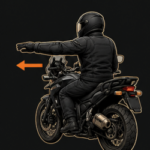
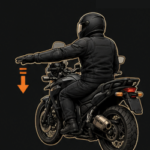
- Left Turn: Extend your left arm straight out to the left, parallel to the road, with an open palm.
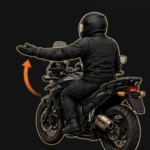
- Right Turn: Keep your right hand on the throttle. Extend your left arm out, then bend the forearm 90 degrees upward at the elbow, with your hand pointing upward.
- Speed Up: Extend your left arm outward with the palm facing upward, then make a clear upward scooping motion.
- Slow Down: Extend your left arm outward with the palm facing down, then make a deliberate downward patting motion.
2. Protecting the Pack: Hazards
- Hazard on the Left: Point clearly toward the road surface on the left side using your left hand.
- Hazard on the Right: Keep both hands on the controls and extend your right foot off the footpeg, pointing down toward the hazard on the right.
Use these signals for potholes, gravel, debris, animals, broken road edges, standing water, or any obstruction that could affect the rider behind you.
3. Maintaining Order: Formations
- Single File Formation: Raise your left arm straight up, with one index finger pointing upward.
Use this when visibility is poor, roads are narrow or uneven, the route becomes twisty, or the group needs more room to manoeuvre safely. - Staggered Formation: Raise your left arm straight up with two fingers—index and middle—pointing upward.
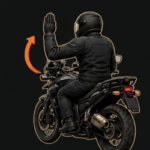
This means it is safe to return to the normal staggered formation. Never ride side by side; each rider must retain space to brake, swerve, and react. - Raise your left arm straight up, with your open palm facing forward.
- This tells the pack to hold formation and follow the Lead.
4. Route Changes and Pull-Offs
For turns, exits, merges, and route changes, the Lead must use road-legal indicators early and clearly. The group should already know the route, planned stops, and regroup points before departure.
Pull Off / Exit: Use the right-turn hand position—left arm extended, forearm raised upward—then swing the forearm inward toward your shoulder. Use this only when safe, together with the motorcycle’s indicators.
A merge demands full attention, acceleration control, lane observation, and adequate space. The Lead will signal early with indicators; every rider must merge independently when it is safe.